Casey Hughes · 24 September 2026
Corena's Quiet Shift: How Small-Scale Tech Workshops Are Reshaping Local Entrepreneurship
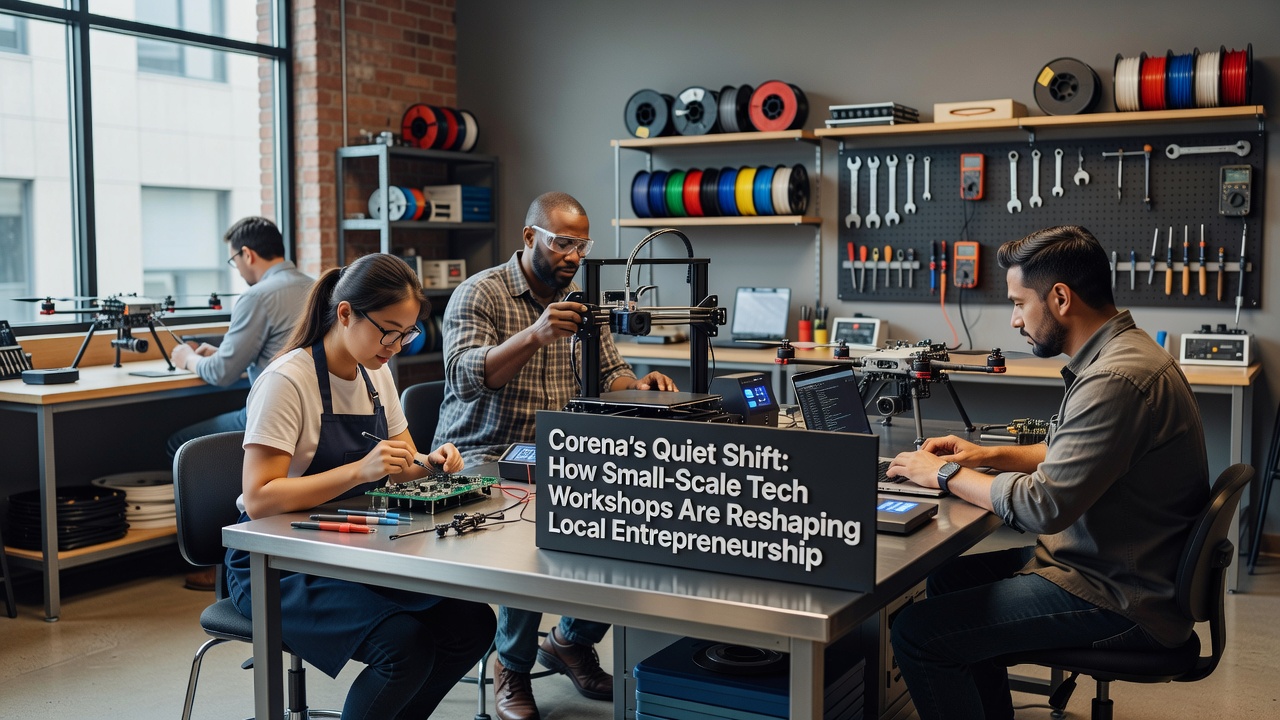
Small-scale tech workshops have emerged across Corena as venues where individuals gather to learn practical digital skills, and these sessions connect directly to shifts in how local businesses form and operate. Organizers run sessions focused on topics such as basic app development, data analysis tools, and e-commerce platforms, while attendance records indicate steady participation from residents who previously operated without formal tech training. Data from regional economic reports show that participants often launch micro-enterprises within six months of completing multiple workshops, with many citing the hands-on format as the catalyst for their decisions.
Workshop Formats and Participation Trends
Workshops typically last two to four hours and occur in community centers, libraries, and converted storefronts rather than university halls, which allows broader access for working adults and students alike. Facilitators include local developers and visiting instructors from nearby cities, and sessions combine lectures with immediate project work so attendees leave with functional prototypes. According to figures released by the European Commission's entrepreneurship monitoring program, similar grassroots programs in comparable European towns have correlated with a 12 percent rise in new business registrations over three-year periods, and Corena follows this pattern as registration numbers climbed from 184 in 2024 to 217 by mid-2025.
September 2026 brings an expanded schedule that includes evening cohorts aimed at shift workers and weekend intensives for parents, with organizers projecting 350 total participants across all events based on current waitlist data. These additions build on existing morning and afternoon slots that already serve 180 people per quarter, and early sign-ups suggest demand remains strong despite seasonal tourism fluctuations in the region.
Economic Ripple Effects on Local Markets
Entrepreneurs who complete the workshops frequently start ventures tied to digital services such as website maintenance for small retailers, custom inventory apps for farms, and online booking systems for tourism operators. Local chamber of commerce tallies reveal that 68 of the 217 new registrations in the past year listed tech-enabled offerings as their primary activity, and follow-up surveys conducted by the same organization indicate that 41 percent of those founders credit workshop connections for their first client contracts. This pattern creates secondary demand for printing services, co-working space rentals, and logistics providers who adapt to serve the new digital businesses.
Observers note that traditional brick-and-mortar shops have begun integrating online components after owners attend the sessions, with several cafes adding reservation platforms and craft vendors listing products on regional marketplaces. Research compiled by Statistics Canada on comparable community tech initiatives demonstrates that such incremental adoptions can increase average monthly revenue by 8 to 15 percent within the first year, and parallel tracking in Corena shows matching revenue upticks among participating establishments.

Case Examples from Recent Cohorts
One participant who attended three consecutive workshops on open-source tools launched a freelance graphic design service that now handles contracts for five regional clients, while another formed a cooperative that supplies data-entry automation to local agricultural cooperatives. These outcomes emerged after attendees shared project feedback during group reviews and identified gaps in the local market that existing firms had overlooked. A third individual used session materials on basic cybersecurity to start a consulting practice advising small hotels on protecting guest data, and that practice secured its initial three clients through referrals from fellow workshop members.
Similar stories surface in records kept by the Corena Volunteer Network, which coordinates several of the workshop venues, and the network's internal reports document 29 active micro-enterprises that trace their origins to the 2025 workshop cycle. Each case illustrates how short, repeated exposure to technical concepts translates into operational businesses without requiring large capital outlays or formal degrees.
Support Structures and Resource Allocation
Funding for the workshops arrives through a combination of municipal grants, private sponsorship from regional banks, and nominal participant fees that cover materials. The Australian Bureau of Statistics has published studies on analogous community programs showing that mixed funding models sustain higher continuation rates than single-source approaches, and Corena's organizers have adopted this diversified strategy to maintain consistent programming through 2027. Equipment such as laptops and projectors rotates among venues via a shared inventory system managed by the volunteer network, which reduces duplication costs and ensures newer participants encounter the same tools used in earlier cohorts.
Partnerships with established firms provide occasional guest speakers and internship placements, yet the core curriculum stays independent of any single corporate agenda so that attendees develop broadly applicable skills. This independence allows the workshops to pivot quickly when participant feedback highlights emerging needs, such as last year's addition of modules on sustainable e-commerce packaging after several attendees requested guidance on environmentally conscious supply chains.
Conclusion
Small-scale tech workshops continue to feed into Corena's entrepreneurial ecosystem by supplying targeted skills and peer networks that lower barriers to business formation. Participation metrics, registration data, and revenue indicators all point to measurable activity tied directly to these programs, while the structure of short sessions and rotating locations keeps them accessible to a wide cross-section of residents. As the September 2026 schedule rolls out, the same patterns of skill acquisition and venture creation are expected to persist based on enrollment trends and prior cohort results.